
英検®準2級プラス スピーキングの問題形式と解き方
準2級プラスのスピーキングは面接形式です。問題カードのパッセージを黙読・音読したあと、パッセージについて1問、3コマのイラストを説明する問題が1問、あなたの意見を問う質問が2問出題されます。態度(アティチュード)も評価されます。
試験の概要
| 試験 | 二次試験(面接) |
|---|---|
| 試験時間 | 約7分二次試験(面接)。面接委員と1対1で行います。 |
| 問題数 | 音読+4問 |
| 満点(CSEスコア) | 625点英検®の結果は技能ごとにCSEスコアで示されます。 |
問題形式の内訳
| 区分 | 問題番号 | 問題形式 | 問題数 | 内容 |
|---|---|---|---|---|
| 音読 | — | パッセージの黙読・音読 | 1 | 20秒黙読したあと音読 |
| No.1 | No.1 | パッセージについての質問 | 1 | According to the passage, ~? |
| No.2 | No.2 | イラストの説明(ナレーション) | 1 | 3コマ・20秒準備・カードの文から始める |
| No.3–4 | No.3–4 | 受験者の意見 | 2 | カードを裏返して答える |
音読
1. パッセージの音読
どんな問題?
問題カードの英文(4〜5文程度)を20秒間黙読し、そのあと声に出して読みます。発音・アクセント・意味のまとまりでの区切りが評価されます。
例題(EiLabo模擬試験 第1回より)
Community Fridges
In some neighborhoods, people have set up community fridges on the street. Local families can put food that they cannot finish into these fridges, and anyone who needs it can take it for free. Some supermarkets also give away bread and vegetables that were not sold at the end of the day, and by doing so, they help reduce food waste.
▶日本語訳を見る
【パッセージの訳】地域の冷蔵庫:いくつかの地域では、人々が通りに地域の冷蔵庫を設置している。地元の家庭は食べきれない食べ物をこの冷蔵庫に入れることができ、必要な人は誰でも無料で持っていける。また、一日の終わりに売れ残ったパンや野菜を無料で提供するスーパーマーケットもあり、そうすることで、食品廃棄を減らす手助けをしている。
解き方
- 黙読の間に、長い文の区切り(関係代名詞や by doing so の前後)を確認する。
- 意味を考えながら、はっきりと読む。速く読む必要はない。
- 読みまちがえても止まらずに、その語句だけ言い直す。
No.1
2. パッセージについての質問
どんな問題?
According to the passage, how/why ~? の形で、パッセージの内容について質問されます。多くの場合、by doing so(そうすることで)や so(だから)が指す内容が答えになります。
例題(EiLabo模擬試験 第1回より)
Community Fridges
In some neighborhoods, people have set up community fridges on the street. Local families can put food that they cannot finish into these fridges, and anyone who needs it can take it for free. Some supermarkets also give away bread and vegetables that were not sold at the end of the day, and by doing so, they help reduce food waste.
- No.1According to the passage, how do some supermarkets help reduce food waste?
▶解答例を見る
No.1
パッセージによると、一部のスーパーマーケットはどのようにして食品廃棄を減らす手助けをしていますか。
By giving away bread and vegetables that were not sold at the end of the day.
一日の終わりに売れ残ったパンや野菜を無料で提供することによってです。
【パッセージの訳】地域の冷蔵庫:いくつかの地域では、人々が通りに地域の冷蔵庫を設置している。地元の家庭は食べきれない食べ物をこの冷蔵庫に入れることができ、必要な人は誰でも無料で持っていける。また、一日の終わりに売れ残ったパンや野菜を無料で提供するスーパーマーケットもあり、そうすることで、食品廃棄を減らす手助けをしている。
解き方
- 質問の後半と同じ表現をパッセージで探す。
- その直前にある by doing so / in this way が指す内容を前の文から見つける。
- How には By ~ing. で、Why には Because ~. で答え、主語は代名詞(they など)に変える。
No.2
3. イラストの説明(ナレーション)
どんな問題?
問題カードの3コマのイラストを、20秒の準備のあと、カードに書かれた文から始めて説明する問題です。
コマの間の矢印に書かれた「時間の経過(The next morning / A few days later など)」を使って、過去形で物語のように話します。
例題(EiLabo模擬試験 第1回より)
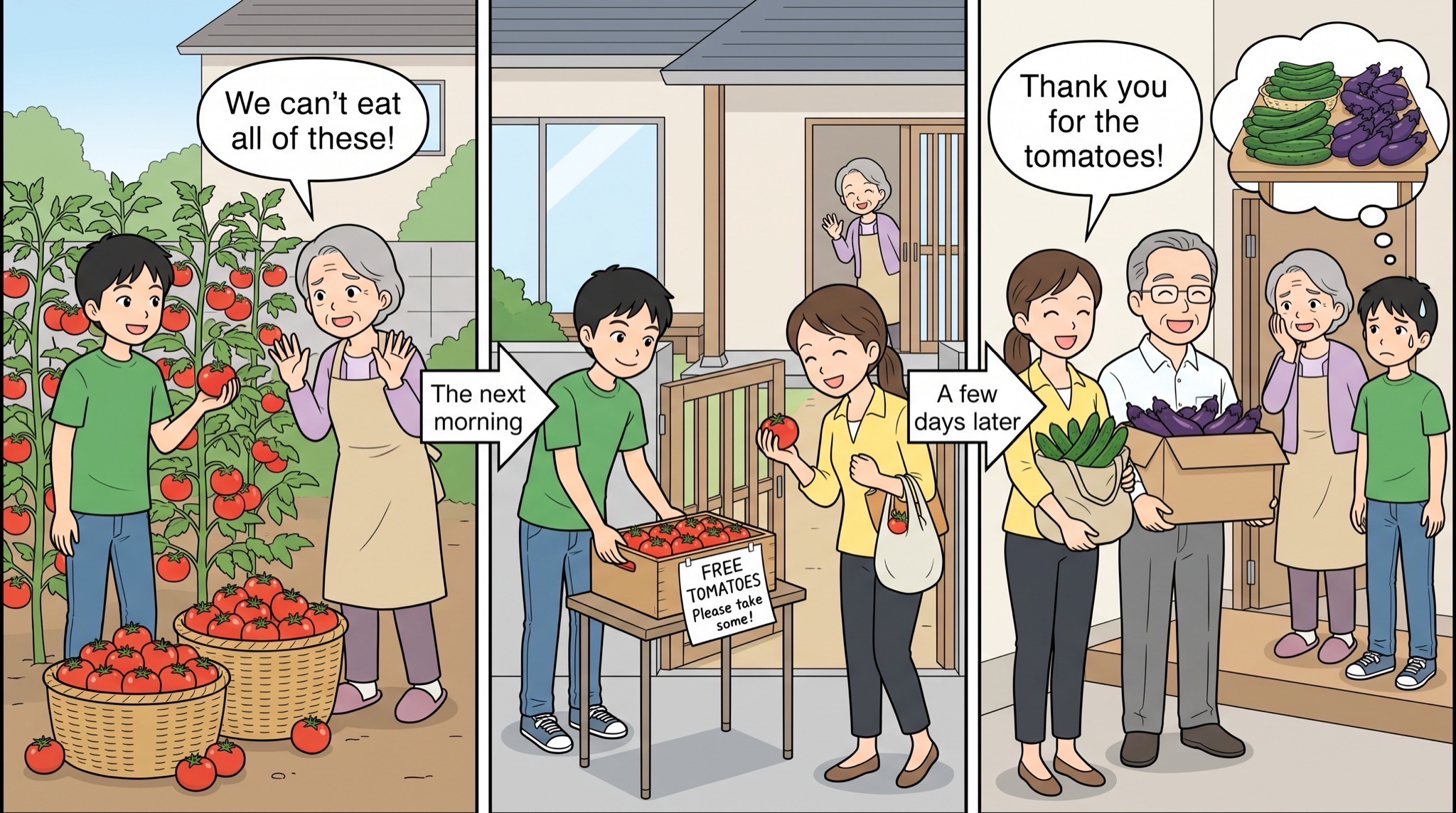
Your story should begin with this sentence: One day, Kenji and his grandmother were picking tomatoes in their garden.
- No.2Now, please look at the pictures and describe the situation. You have twenty seconds to prepare. Your story should begin with the sentence on the card.
▶解答例を見る
No.2
では、絵を見て状況を説明してください。準備時間は20秒です。お話はカードに書かれた文で始めてください。
One day, Kenji and his grandmother were picking tomatoes in their garden. They had so many tomatoes that his grandmother said they could not eat all of them. The next morning, Kenji was putting a box of tomatoes in front of their gate. The sign said that people could take them for free, and a neighbor was happily taking some. A few days later, some neighbors came to thank them for the tomatoes. They were giving Kenji and his grandmother a lot of cucumbers and eggplants. His grandmother was surprised, and Kenji looked worried because they had too many vegetables again.
ある日、ケンジと祖母は庭でトマトを収穫していました。トマトがあまりにたくさんあったので、祖母は全部は食べきれないと言いました。翌朝、ケンジは家の門の前にトマトの箱を置いていました。看板には自由に持っていってよいと書かれていて、近所の女性がうれしそうにいくつか持っていくところでした。数日後、近所の人たちがトマトのお礼を言いに来ました。彼らはケンジと祖母にたくさんのキュウリとナスを渡していました。また野菜が多すぎることになったので、祖母は驚き、ケンジは困った様子でした。
【書き出しの訳】ある日、ケンジと祖母は庭でトマトを収穫していました。
解き方
- 準備の20秒で、各コマの「だれが・何をしているか」と吹き出しの内容を確認する。
- 1コマ目はカードの文をそのまま読む。2コマ目以降は矢印の言葉で始める。
- 例題では「トマトがたくさん採れた → 翌朝、門の前に無料のトマトを置いた → 数日後、近所の人がお礼に来た」の流れを、矢印の時間表現でつなぐ。
- 各コマで2文ずつ、動作(was ~ing)とセリフ・考え(said that ~ / was thinking that ~)を述べる。
No.3–4
4. 受験者の意見
どんな問題?
カードを裏返して、社会的な話題について意見を述べる問題です。No.3は「Some people say ~. What do you think about that?」、No.4は「Do you think ~?」の形がよく出ます。
意見を述べたあと、理由を2文程度で説明します。
例題(EiLabo模擬試験 第1回より)
- No.3Some people say that neighbors today do not talk to each other as much as they did in the past. What do you think about that?
- No.4Today, some companies let their workers choose what time they start work. Do you think more companies will do this in the future?
▶解答例を見る
No.3
今日の近所の人どうしは、昔ほどお互いに話をしないと言う人がいます。あなたはそれについてどう思いますか。
I agree with that. Many people are busy with work and spend their free time on their smartphones. Also, people move to new places more often these days, so they do not have time to get to know their neighbors well.
私もそう思います。多くの人は仕事で忙しく、自由な時間をスマートフォンに使っています。また、最近は人々が新しい場所へ引っ越すことが多くなったので、近所の人をよく知る時間がありません。
No.4
今日、従業員に仕事の始業時間を選ばせる会社があります。将来、もっと多くの会社がこうすると思いますか。
Yes, I think so. Workers who can choose their own hours can avoid crowded trains in the morning. They can also take care of their children or parents more easily. Companies want to keep good workers, so more of them will offer this system.
はい、そう思います。自分で勤務時間を選べる従業員は、朝の混んだ電車を避けることができます。また、子どもや親の世話もしやすくなります。会社はよい従業員を引き留めたいので、もっと多くの会社がこの制度を取り入れるでしょう。
解き方
- 最初に I agree. / I disagree. / Yes, I think so. / No, I don't think so. と立場をはっきり言う。
- 理由を2つ、具体的に述べる(Also, ~ で2つ目をつなぐ)。
- 賛成・反対のどちらでもよい。話しやすい立場を選ぶ。
準2級プラスのスピーキングに挑戦する
本番と同じ形式の模擬試験と、問題形式ごとの練習問題で、この記事の内容を実際に試してみましょう。