
英検®準1級 スピーキングの問題形式と解き方
準1級のスピーキングは面接形式です。最初に簡単な日常会話(自由会話)があり、そのあと4コマのイラストを見てストーリーを2分間で説明します。続いて、イラストに関する質問1問と、社会的な話題についての質問3問に答えます。音読はありません。態度(アティチュード)も評価されます。
試験の概要
| 試験 | 二次試験(面接) |
|---|---|
| 試験時間 | 約8分二次試験(面接)。面接委員と1対1で行います。 |
| 問題数 | ナレーション+4問 |
| 満点(CSEスコア) | 750点英検®の結果は技能ごとにCSEスコアで示されます。 |
問題形式の内訳
| 区分 | 問題番号 | 問題形式 | 問題数 | 内容 |
|---|---|---|---|---|
| ナレーション | — | 4コマのストーリー説明 | 1 | 1分準備・2分で説明・カードの文から始める |
| No.1 | No.1 | イラストに関する質問 | 1 | 4コマ目の人物の立場で考えを述べる |
| No.2–4 | No.2–4 | 社会的な話題への意見 | 3 | カードを裏返して答える |
ナレーション
1. 4コマのストーリー説明(ナレーション)
どんな問題?
問題カードの4コマのイラストを1分間で準備し、カードに書かれた文から始めて、2分間でストーリーを説明します。
2〜4コマ目にある時間の表示(A few weeks later / One year later など)を使い、過去形で話を展開します。4コマ目には、1〜3コマ目の取り組みから生まれた思わぬ問題が描かれることが多いです。
例題(EiLabo模擬試験 第1回より)
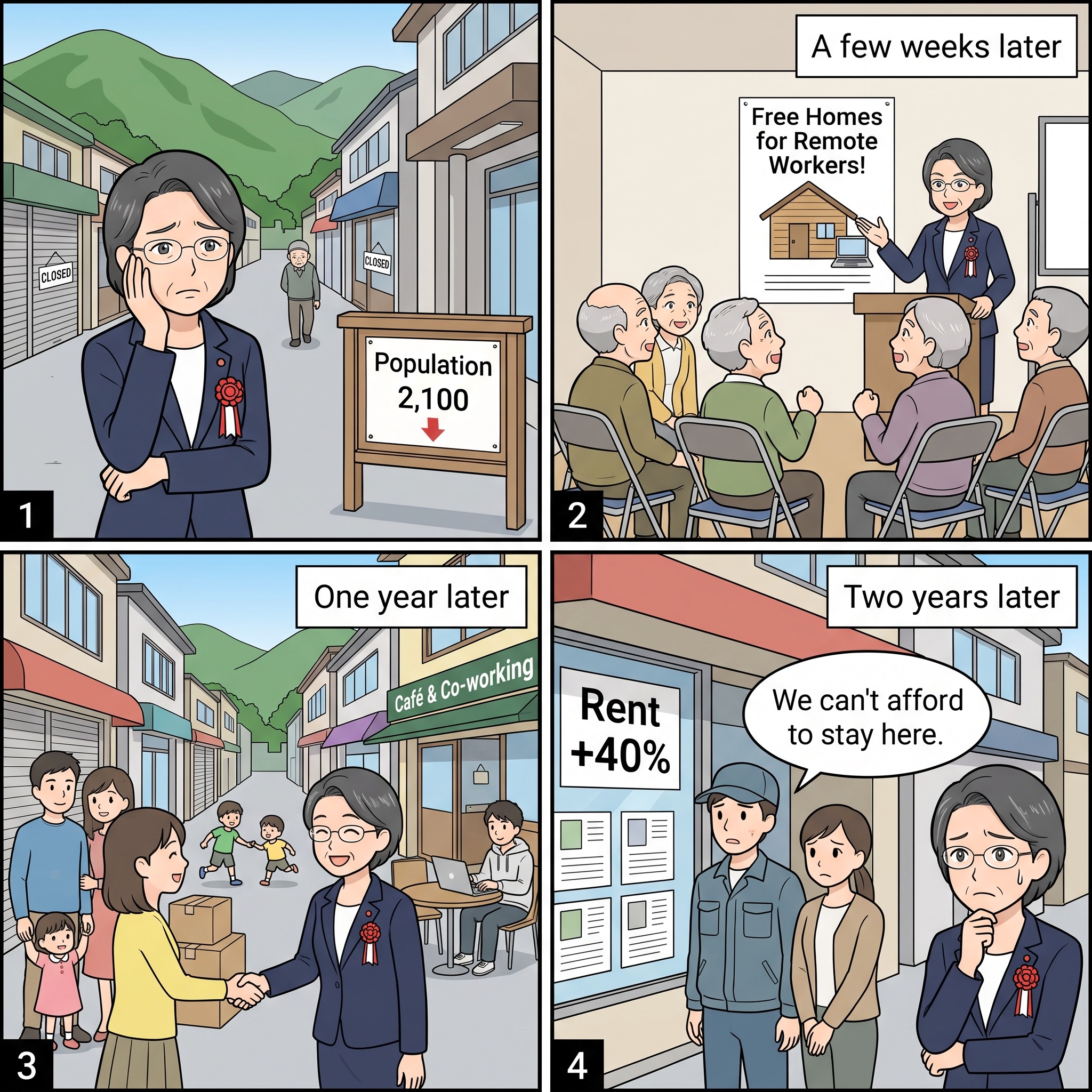
Your story should begin with this sentence: One day, a mayor was worried because the population of her small town was falling.
- ナレーションYou have one minute to prepare. This is a story about a mayor who wanted to bring new residents to her town. You have two minutes to narrate the story. Your story should begin with the sentence on the card.
▶解答例を見る
ナレーション
準備時間は1分です。これは、自分の町に新しい住民を呼び込みたいと考えた町長の話です。2分間でお話をしてください。お話はカードに書かれた文で始めてください。
One day, a mayor was worried because the population of her small town was falling. She was standing on the main street, where many shops had closed, and a sign showed that only about two thousand people lived in the town. A few weeks later, the mayor held a meeting for local residents. She announced a plan to give free renovated houses to people who could work remotely, and a poster said, "Free homes for remote workers!" The residents listening to her looked hopeful. One year later, the plan had been a great success. Many young families had moved to the town, and the main street was busy again. Some newcomers were working on laptops at a café, and children were playing in the street. The mayor was smiling happily as she welcomed a new family. However, two years later, a new problem had appeared. A sign in the window of a real estate agency showed that rents had gone up by forty percent. A young local couple were looking at it with worried faces, and the man was saying that they could not afford to stay in the town. The mayor was watching them, and she looked troubled.
ある日、ある町長は自分の小さな町の人口が減っていることを心配していました。彼女は多くの店が閉まった大通りに立っており、看板には町に住んでいるのが約2,000人だけだと示されていました。数週間後、町長は地元住民向けの集会を開きました。彼女はリモートで働ける人々に改修した家を無料で提供する計画を発表し、ポスターには「リモートワーカーに無料の家を!」と書かれていました。話を聞いている住民たちは期待に満ちた様子でした。1年後、その計画は大成功を収めていました。多くの若い家族が町に引っ越してきて、大通りは再びにぎわっていました。カフェでノートパソコンを使って働く新しい住民もいて、子どもたちは通りで遊んでいました。町長は新しい家族を迎えながら、うれしそうにほほ笑んでいました。しかし2年後、新たな問題が生じていました。不動産店の窓の掲示は、家賃が40パーセント上がったことを示していました。地元の若い夫婦が心配そうな顔でそれを見ており、男性はもうこの町に住み続ける余裕がないと言っていました。町長は彼らを見ていて、困った表情をしていました。
【書き出しの訳】ある日、ある町長は自分の小さな町の人口が減っていることを心配していました。
解き方
- 準備の1分で、各コマの「状況・人物の行動・セリフや看板の文字」を確認し、話の流れ(問題 → 解決策 → 成功 → 新たな問題)をつかむ。
- 1コマ目はカードの文をそのまま言い、各コマで2〜3文ずつ話す。
- 2〜4コマ目は時間の表示から話し始める(A few weeks later, ~.)。
- セリフや看板の内容は said that ~ / a sign said ~ で間接的に伝える。2分を使い切るつもりで話す。
No.1
2. イラストに関する質問
どんな問題?
「Please look at the fourth picture. If you were the ~, what would you be thinking?」と、4コマ目の人物の立場で何を考えているかを答えます。
例題(EiLabo模擬試験 第1回より)
- No.1Please look at the fourth picture. If you were the mayor, what would you be thinking?
▶解答例を見る
No.1
4番目の絵を見てください。もしあなたが町長だったら、何を考えているでしょうか。
I'd be thinking that my plan has worked too well. I wanted to save the town, but now the young people who grew up here are being forced out by high rents. I should have thought about housing for local residents, too. Maybe the town could build some affordable apartments or limit how much rents can rise each year.
自分の計画はうまくいきすぎてしまった、と考えているでしょう。町を救いたかったのに、今ではここで育った若者たちが高い家賃のせいで追い出されようとしています。地元住民の住宅のことも考えておくべきでした。町で手頃な価格のアパートを建てるか、家賃の毎年の値上げ幅を制限できるかもしれません。
解き方
- I'd be thinking that ~. の形で、仮定法を使って答え始める。
- 4コマ目の状況(計画がうまくいきすぎて別の問題が起きた、など)を反省や後悔の形で述べる(I should have ~.)。
- 今後どうするかの考えを1文加えると、内容に深みが出る。
準1級のスピーキングに挑戦する
本番と同じ形式の模擬試験と、問題形式ごとの練習問題で、この記事の内容を実際に試してみましょう。
No.2–4
3. 社会的な話題への意見
どんな問題?
カードを裏返して、社会的な話題について意見を述べます。No.2はイラストのテーマに関連した質問、No.3・No.4はより一般的な社会問題(働き方・教育・環境・政策など)についての質問です。
Should ~? / Do you think ~? の形が多く、立場と理由を30〜40秒程度で論理的に述べることが求められます。
例題(EiLabo模擬試験 第1回より)
▶解答例を見る
No.2
では、カードを裏返して置いてください。企業は従業員が好きな場所から働くことを認めるべきですか。
I think they should, at least for jobs that can be done online. Employees who can choose where to live save commuting time and often feel more satisfied, so they may work more efficiently. However, teams still need to communicate well, so companies could ask remote workers to come to the office a few times a month for important meetings.
少なくともオンラインでできる仕事については、認めるべきだと思います。住む場所を選べる従業員は通勤時間を節約でき、満足度も高いことが多いので、より効率的に働けるかもしれません。ただし、チームには依然として良い意思疎通が必要なので、企業はリモートで働く人に、重要な会議のために月に数回出社するよう求めることもできるでしょう。
No.3
将来、田舎に住むことを選ぶ若者は増えると思いますか。
Yes, I think so. Housing in big cities is becoming very expensive, while in the countryside young people can rent or even buy a large house for much less money. Also, fast internet now reaches most rural areas, so many jobs no longer require people to live near an office. However, rural towns will need better hospitals and schools to keep young families there.
はい、そう思います。大都市の住宅はとても高くなっている一方で、田舎では若者がずっと安い金額で広い家を借りたり、買ったりすることさえできます。また、今では高速インターネットがほとんどの地方に届いているので、多くの仕事で職場の近くに住む必要がなくなっています。ただし、若い家族に住み続けてもらうには、地方の町はより良い病院や学校を整える必要があるでしょう。
No.4
すべての若者に一定期間の社会奉仕活動を義務づけるべきですか。
No, I don't think it should be compulsory. Community service is valuable, but if young people are forced to do it, many will simply go through the motions without really caring about the people they help. It would be better for schools and local governments to offer attractive volunteer programs and give credit to students who take part, so that they choose to help others willingly.
いいえ、義務化すべきではないと思います。社会奉仕活動には価値がありますが、若者が強制されれば、多くは助ける相手のことを本当には気にかけず、ただ形だけこなすことになるでしょう。学校や地方自治体が魅力的なボランティアの機会を提供し、参加した生徒に単位を与えて、自ら進んで人を助けることを選べるようにするほうがよいと思います。
解き方